
Bachelor of Medicine, Bachelor of Surgery (MBBS)
The Bachelor of Medicine, Bachelor of Surgery (MBBS) program at Divine Word
University is a five-year, full-time undergraduate degree designed to produce
clinically competent, ethically grounded, and socially responsive doctors equipped
to serve the healthcare needs of Papua New Guinea and beyond.
Through an integrated and innovative curriculum, students gain a strong
foundation in biomedical sciences, clinical skills, and population health. The
program emphasizes professional accountability, evidence-based practice, and
lifelong learning. Graduates are nurtured to uphold the highest standards of ethical
conduct and professionalism while developing a global perspective on health and
healthcare systems
-
MC121 Mathematics & Physics for Doctors
Study Period: Semester OneIncludes basic calculations and calculations practically used in medical profession. It coves topics relevant to medical student providing background to understand the principles of physiology and modern medical technology.
-
MED104 Christian & Professional Ethics
Study Period: Semester OneDiscusses common bioethical dilemmas as well as medical professionals code of ethics, equips students with methodological ethical problem solving in bioethics
-
MED109 Chemistry
Study Period: Semester OneIncludes basic chemistry and organic chemistry including practical sessions in the chemistry laboratory
-
MED110 Cellular & Molecular Biology
Study Period: Semester OneCovers basic aspects of molecular and cellular biology including microscopic exercises in the laboratory
-
MED117 Digital Literacy for Medical Students
Study Period: Semester OneBasic computer and online skills, editing skills, making graphs, constructing simple data base, searching online literature
-
MED112 Biochemistry
Study Period: Semester TwoBiochemistry & molecular biology & clinical biochemistry
-
MED114 Anatomy and Physiology 1
Study Period: Semester TwoMusculo-skeletal and integumentary systems: microscopic, gross and surface anatomy, function of the systems, vertical integration by references to common pathologies, radio-anatomy of skeletal system
-
MED115 Anatomy and Physiology 2
Study Period: Semester TwoCardio-respiratory, digestive and urinary systems microscopic, gross and surface anatomy, function of the systems, vertical integration by reference to common diseases, included CPR
-
MED118 Writing & Professional skills
Study Period: Semester TwoAcademic writing skills, professional skills including self-care module, counselling module, professionalism and social responsibility
-
MED204 Laboratory Skills
Study Period: Semester OneHistology and microscopy, performance of common tests, interpretation of common pathologic tests including rapid tests
-
MED211 Anatomy and Physiology 3
Study Period: Semester OneCentral nervous, endocrine and reproduction systems: microscopic, gross and surface anatomy, function of the systems, vertical integration by reference to common diseases
-
MED214 Pharmacology & Pathophysiology I
Study Period: Semester OneIntegrated pharmacology with pathophysiological and molecular mechanism of drugs and reference to common cases
-
Comprehensive Basic Science Exam (CBSE)
Study Period: Semester TwoCourse requirement to be met to progress to clinical year-4. Examines the understanding of clinically important pathomechanisms and application of basic sciences and pre-medical sciences in common clinical scenarios; pharmacological calculations
-
MED208 Clinical Skills
Study Period: Semester TwoHistory taking, physical examination, symptoms, signs, communication skills, CRP pathology1Physical examination, history taking, reading relevant laboratory tests and imaging, basic clinical skills in simulated environment
-
MED210 General & Systemic Pathology
Study Period: Semester TwoThe molecular basis of diseases, common pathology in different systems and organs, for systemic pathology case-based learning
-
MED220 Pharmacology & Pathophysiology II
Study Period: Semester TwoIntegrated pharmacology with pathophysiological and molecular mechanism of drugs and reference to common cases
-
MED302 Child Health
Study Period: Semester OneChild health and disease, child advocacy, clerkship & clinical exposure
-
MED303 Women’s Health
Study Period: Semester OneReproduction, OBS, gynaecology, clerkship & clinical exposure
-
MED306 Surgery
Study Period: Semester OneGeneral surgery with orthopaedics, clerkship & clinical exposure
-
MED308 Health Policy, Management & Leadership
Study Period: Semester OneHealth policy, management & leadership, team work
-
MED308 Health Policy, Management & Leadership
Study Period: Semester OneHealth policy, management & leadership, team work
-
MED304 Internal Medicine (20CP)
Study Period: Semester TwoInfections, acute & chronic diseases, healthy ageing, clerkship & clinical exposure
-
MED305 Medical Research Methods
Study Period: Semester TwoMedical studies, application, management, research proposal
-
MED305 Medical Research Methods (elective)
Study Period: Semester TwoMedical studies, application, management, research proposal
-
MED307 Emergency (20CP)
Study Period: Semester TwoLife-saving, stand-alone interventions, triage, clerkship & clinical exposure
-
MED309 Epidemiology & Biostatistics (15CP)
Study Period: Semester TwoEpidemiological concepts in approaching public health, covers local and global public health challenges underlying preventive measures
-
MED310 Medical Pedagogy; (elective)
Study Period: Semester TwoCurrent pedagogical theories, effective learning and teaching techniques, assessment for learning and of learning, clinical teaching
-
MED311 Leadership in Health; (elective)(15CP)
Study Period: Semester TwoLeadership theories and styles, Leadership applied in health, project management, promoting change, leading a team
-
MED402 Special Nutrition (5CP)
Study Period: Semester OneNutrition for disease prevention and care (1–week-block)
-
MED406 Occupational Health and Safety (5CP)
Study Period: Semester OnePrinciples of occupational health and safety (1-week block)
-
MED407 Dermatology & STI (10CP)
Study Period: Semester OneCommon skin diseases, sexually transmitted infections (3-week block)
-
MED409 Anaesthesiology (15CP)
Study Period: Semester One3-week-block; common anaesthetic procedures and problems, clinical exposure
-
Med 410 Radiology & Ultrasonography (15CP)
Study Period: Semester OneInterpretation of common radiology and US images, US simulation training
-
MED413 Ophthalmology (15CP)
Study Period: Semester OneInclude case studies & clinical exposure, 3-week block
-
MED414 ENT (Ear, Nose & Throat) 10CP)
Study Period: Semester OneInclude case studies & clinical exposure, block: 2-week block
-
MED415 Clinical Pharmacology (15CP)
Study Period: Semester OneClinical pharmacology with case studies (3–week-block)
-
MED416 General & Rural Medicine (30CP)
Study Period: Semester OneClinical exposure, case studies based, clinical & public health approach (29-week-block)
-
MED424 Medical Research Project (elective) (15CP)
Study Period: Semester OneCompletion of medical research project report
-
MED421 Medical Special (30CP)
Study Period: Semester TwoClinical exposure, heart & lungs, endocrinology, neurology, kidney, dermatology (8-week block)3
-
MED422 Surgical Special (30CP)
Study Period: Semester TwoORL, urology, cancer, orthopaedic, ENT (8 -week block)3
-
MED426 Paediatrics & Neonatology (30CP)
Study Period: Semester TwoClinical exposure (8-week block)3
-
MED427 Emergency and Anaesthesiology (30CP)
Study Period: Semester TwoClinical exposure: medical & surgical, eye module: full responsibility (8-week block)3
Entry Requirements
- School Leavers with at least three "A"s and two "B" grades in English, Mathematics, Chemistry and Biology and/or Physics taken at Grade 12 level. All school leavers are obliged to take and send the results of the Aptitude test.
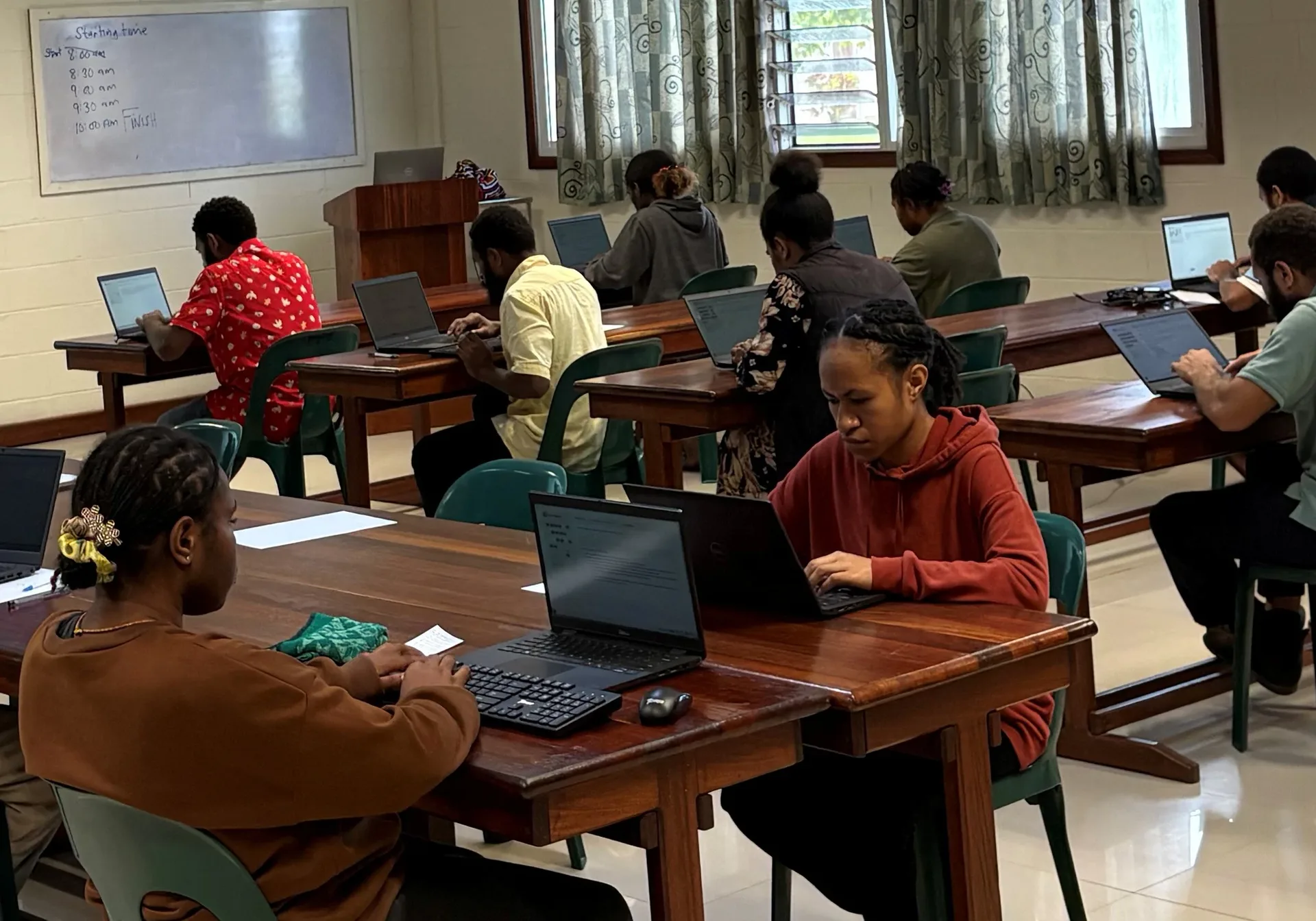
- Non-school leavers will be subject to sit for the entry exam as part of the selection for the program. The selection is based on the results of the entry exam, including the 5 subjects: Language and Literature (20%), Advanced Mathematics (15%), Biology (25%). The exam will be organized in the following DWU Centres:
Madang (Main Campus)
POM Campus
Rabaul St Mary School of Nursing
Mt Hagen Holy Trinity Teachers College
Applicants who can provide a valid, signed contract to work in rural hospital after the residency training will receive bonus points. For Non-school leavers, the MBBS Application Form must be accompanied by a K400 fee (K100 Administration fee and K300 Exam fee). Candidates will be responsible for their own logistical arrangements to sit for the entry exam. The exam dates will be announced later once the application process is closed.
We also welcome international students
Career opportunities and pathways for graduates.
Graduates of the program are well-prepared for diverse roles across the national
health system, including hospitals, rural health centres, and public health
institutions. They are eligible to pursue postgraduate medical education in various
clinical specialties and sub-specialties.
With training in research methodology,
graduates can contribute to evidence generation in universities, research
institutes, or global health organizations. The DWU MBBS program is continuously
benchmarked against international standards, ensuring graduates are competitive
for further training and employment opportunities both locally and globally