
Master of Leadership in Development
The Master of Leadership in Development (MLD) program recognizes the needs articulated in PNG’s Vision 2050 for human capital development and people empowerment for responsible sustainable development for Papua New Guinea.
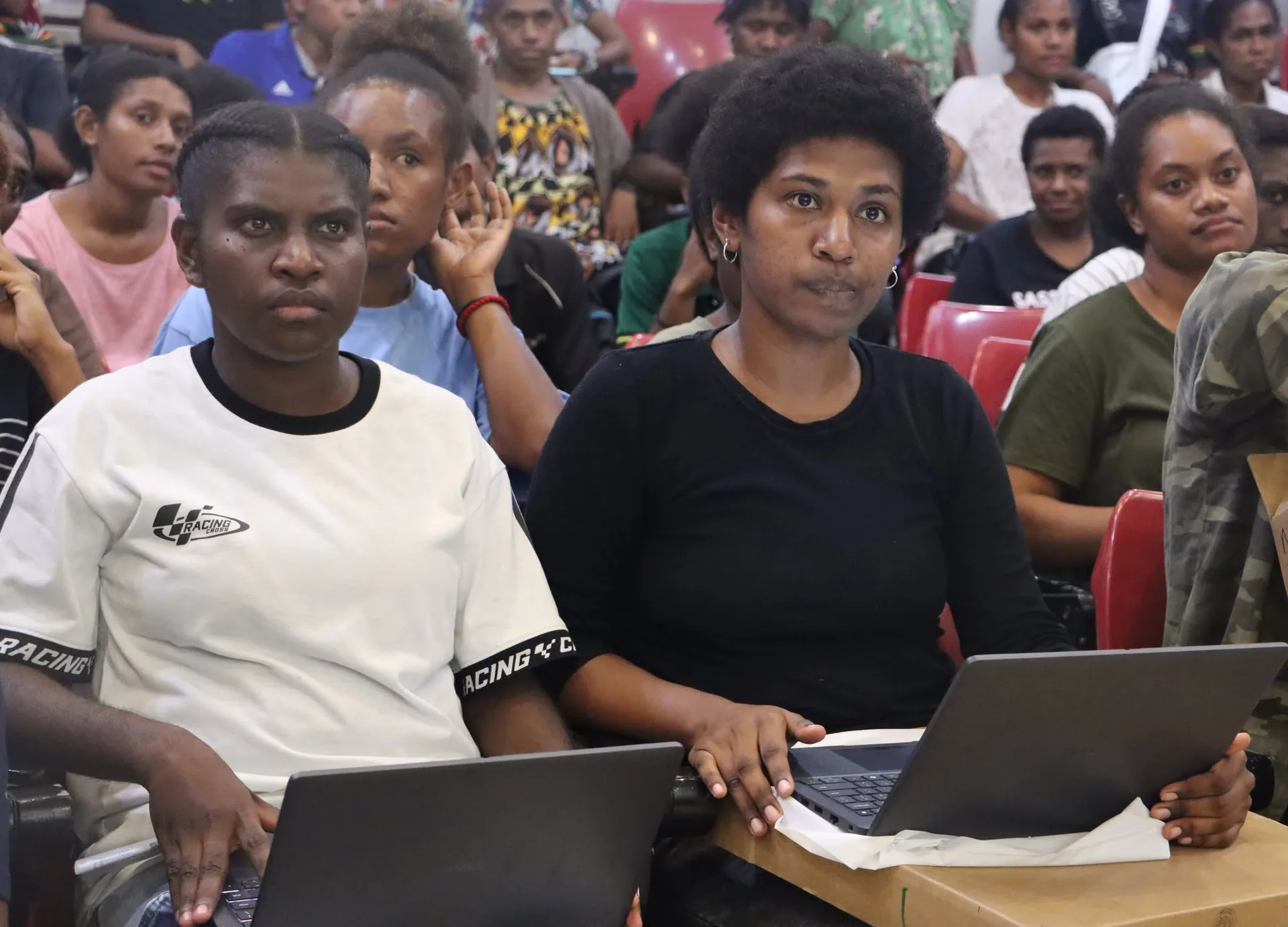
The MLD program is offered in flexible learning mode. Students take two units a semester and complete the program in two years. Students are required to participate in a two-week residential component each semester. Students are expected to have their own personal laptop.
-
LD604: Professional ethics in organizations
Study Period: Semester OneThis unit explores ethics and philosophy of human acts as foundations of leadership and management thought and action. This unit assists students to create a framework for ethical decision making as a useful process for exploring ethical dilemmas and identifying ethical courses of action in PNG’s complex culturally diverse context. Students will explore theories of what an ethical community, an ethical business, an ethical government or an ethical society should be.
-
LD609: Applied research and evaluation methods
Study Period: Semester OneIn this unit students are exposed to the skills of undertaking a research project. Different research paradigms and perspectives, and related data collection and analysis techniques are explored and applied to case material. Students explore a research problem relevant to their workplace or organization and apply the knowledge and skills of research to develop a proposal for a research project.
-
LD606: Cross-cultural & Gender Leadership
Study Period: Semester TwoThis unit is specifically designed to develop cross-cultural and gender awareness and competency for PNG and Pacific Island leaders who work in diverse cultural settings. It is also designed for students who seek to work with people from other cultures in multi-cultural settings. Using theoretical frameworks, students will examine their own culture, compare it with other cultures, and develop strategies for working successfully in multi-cultural and cross-cultural environments. Emphasis will be on developing intercultural understanding, understanding of gender, social inclusion, leadership and problem-solving skills when working with people from other cultures. Emphasis will also be placed on the importance of communication skills and how cultural style may impact the exchange of ideas, perception, effective communication, and ultimately work performance. Emphasis will also be on developing intercultural and cross-cultural understanding, negotiation, collaboration and problem-solving skills.
-
LD610: Global & Regional Development
Study Period: Semester TwoThis unit aims to prepare students to analyze and interpret data collected for student’s research project. The theoretical component of this unit introduces different data analysis techniques suitable for qualitative and quantitative types of research. The practical component of the unit develops skills for coding, analyzing and interpreting quantitative and qualitative data and writing up a research report.
-
LD603: Leading & managing change in developing countries
Study Period: Semester OneThis unit explores leadership as shaped primarily by cultural, social, political and economic contexts in developing countries. This requires an understanding of the multiple tensions, e.g. the individual versus the community or the common good, local-level government versus provincial level government, provincial-level government versus national government, public sector versus private sector, government versus churches, professional development versus sustainable development, multinational corporations versus resource-owners. Students consider skills in leading in challenging environments, leading diverse employees, coaching/mentoring and managing change.
-
LD611: Data analysis and research report writing
Study Period: Semester OneIn this unit, students are guided to produce a report on the research problem they developed in unit LD609. Crafting skills are developed for sections such as introduction, context, literature review, design of the study, analysis of the results, discussion, recommendations, referencing and appendices. As well as a written report, students are required to present their projects orally in an organized seminar.
-
LD602: Strategic planning for development
Study Period: Semester TwoThis unit explores strategic thinking and planning as key leadership skills. Organizational leaders want to have maximum impact using the limited talents, resources and opportunities they have. The “think locally/act globally” model will be discussed. The challenge for leaders is to influence core organizational competencies to gain strategic advantage in an uncertain and ever-changing environment. Topics will include organizational structure and function, strategic planning and management, organizational life cycles, vision and adaptability.
-
LD605: Conflict resolution and reconciliation
Study Period: Semester TwoThis unit considers conflict from an organizational perspective. The unit addresses such questions as: What are the costs to employers for failing to address workplace conflict? What are ethical and legal frameworks within which conflict must be handled? What ways have organizations found effective for systematically resolving and preventing conflict? Ethical considerations in resolving conflicts are explored. Alternate dispute resolution, especially in the context of PNG and the Pacific Region, must ultimately end in reconciliation. For this reason, students will also be introduced to a regional Melanesian and Pacific framework of resolving conflicts.
Learning outcomes for this program will be published soon.
Admission requirements
Potential candidates who hold a Bachelor degree in Arts, Social Sciences, Business, Public Administration, Education, Tourism and Hospitality Management, or related fields with at least three years of relevant work experience are encouraged to apply. An above average performance at undergraduate studies or equivalent, including Prior Learning, is prerequisite for entry to MLD.
No career outcomes have been listed for this program yet.
No FAQs have been added for this program yet.